How Artificial Intelligence Works: Algorithms, Data & Learning Explained
From the virtual assistants on our phones to the recommendation systems that suggest our next movie, Artificial Intelligence is everywhere. This powerful technology is no longer science fiction; it's a practical tool that is transforming various industries and changing how we live and work. But behind the curtain of these smart applications lies a fascinating question: how artificial intelligence works.
It might seem like magic, but the reality is a brilliant combination of computer science, mathematics, and a whole lot of data. Artificial Intelligence is a broad field of computer science focused on creating a machine capable of performing tasks that typically require human intelligence. This includes learning, problem-solving, and decision-making.
This article will demystify the process, breaking down exactly how artificial intelligence works in simple, easy-to-understand terms. We'll explore the core components that make a machine intelligent, from the data it consumes to the learning process that makes it smarter.
The Three Pillars of How Artificial Intelligence Works
At its heart, Artificial Intelligence is built on three fundamental pillars. Understanding these is the key to understanding the entire technology.
- Data: This is the fuel. Without it, an AI machine can't learn anything.
- Algorithms: This is the engine. These are the instructions that tell the machine how to learn from the data.
- Learning: This is the process. It’s how the machine gets smarter over time by finding patterns in the data.

Pillar 1: Data \- The Fuel for Every AI Machine
Imagine trying to teach students about the world without giving them any books, pictures, or lessons. It would be impossible. An Artificial Intelligence machine is in the same position. Data is the textbook, the library, and the life experience for any AI program. The more high-quality data a machine has, the better it can learn to perform its work.
This data can come in many forms:
- Text: Millions of articles, books, and websites.
- Images: Vast libraries of photos and videos.
- Numbers: Financial records, sensor readings, and spreadsheets.
Pillar 2: Algorithms \- The Engine That Makes the Machine Work
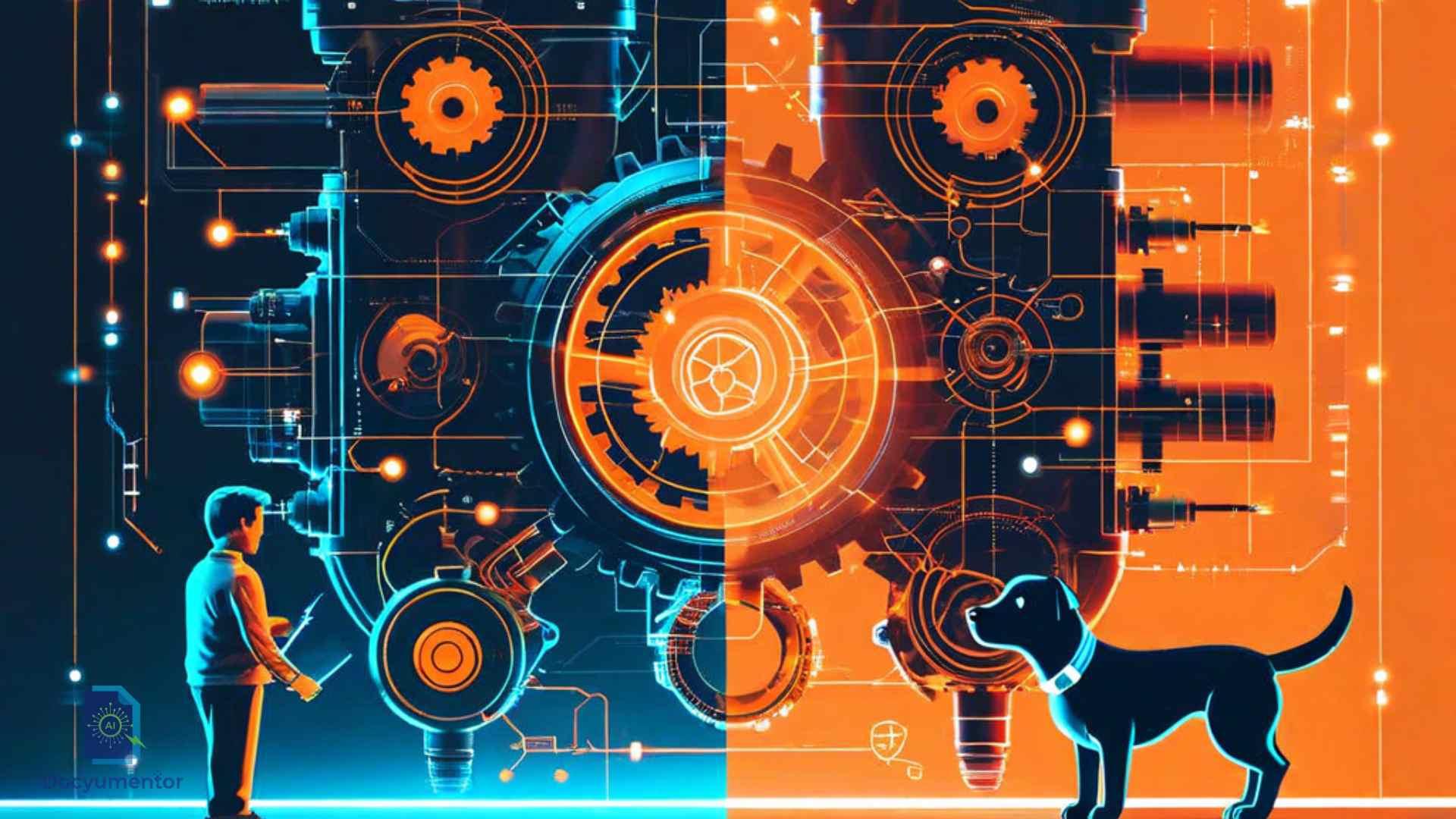
If data is the fuel, an algorithm is the engine that turns that fuel into power. In simple terms, an algorithm is a set of rules or a step-by-step set of instructions that a computer program follows to complete a task. In Artificial Intelligence, these algorithms are designed to create AI models. A model is the output of the training process—it's the "brain" that has learned from the data and can now make predictions or decisions.
There are several ways these algorithms can work, but most fall into three main learning styles.
Learning from Examples: Supervised Learning
This is the most common type of machine learning. It's like a student learning with a teacher. The data is "labeled," meaning the correct answer is provided. For example, a machine is fed millions of images, each labeled as "cat" or "not a cat." The algorithm's job is to learn the patterns that define a cat. This is the same process used in facial recognition technology or for an AI program that learns to identify specific fields on a document.
Finding Hidden Patterns: Unsupervised Learning
In this style, the AI program is given a large amount of unlabeled data and has to find the hidden patterns on its own. It's like giving a student a box of mixed Lego bricks and asking them to sort them into logical groups. This is useful for tasks like customer segmentation (finding groups of similar customers) and is a key part of how many recommendation systems work.
Learning Through Trial and Error: Reinforcement Learning
This is how we often train pets. The machine learns by interacting with an environment. It receives a "reward" for a correct action and a "penalty" for an incorrect one. Over millions of trials, the machine learns the best strategy to maximize its rewards. Reinforcement learning is the technology behind AI that can play complex games and is a critical component in developing self-driving cars. This entire process of reinforcement learning allows a machine to master very complex tasks.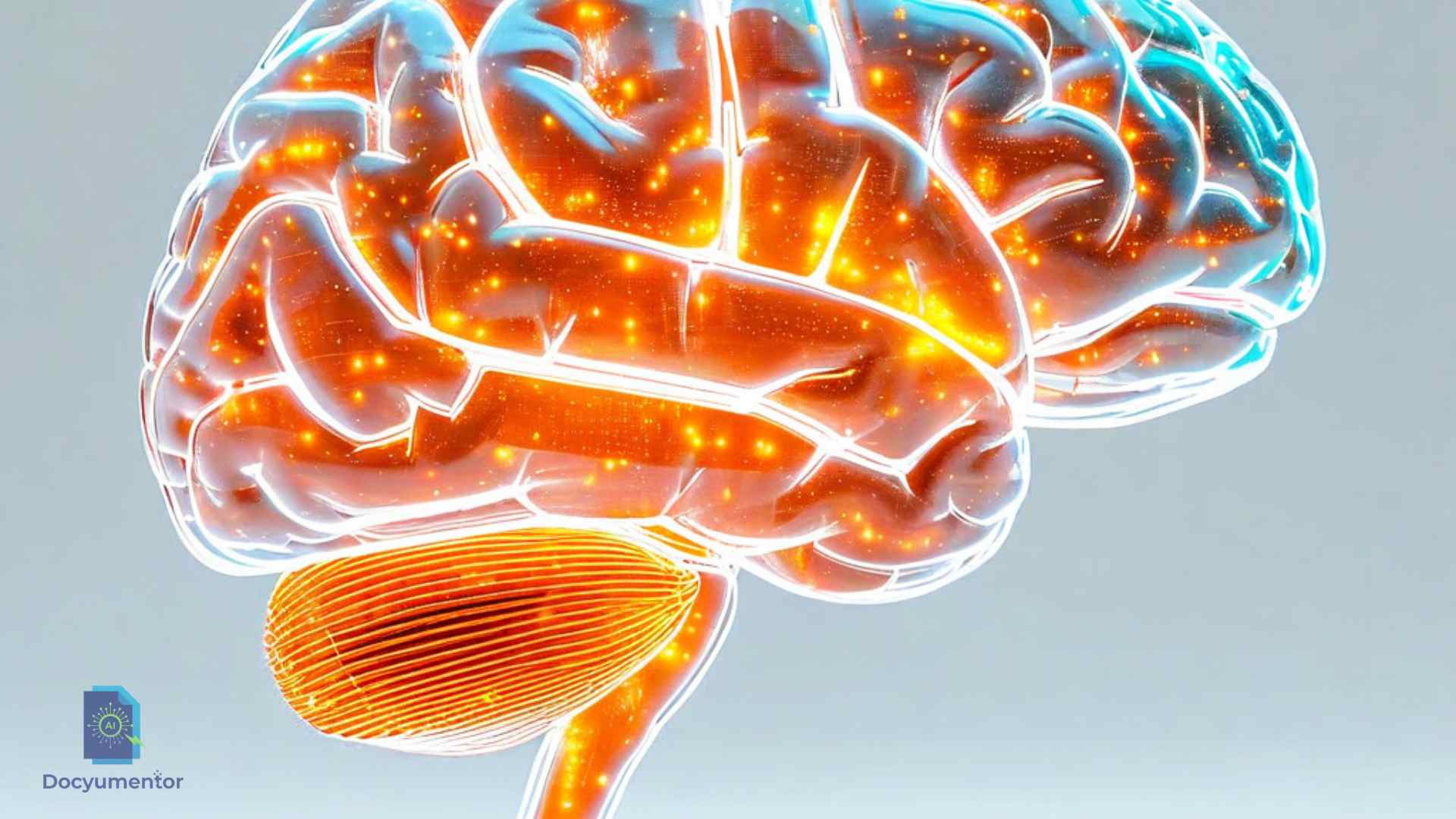
Pillar 3: The Learning Process \- How an AI Machine Gets Smarter
So we have the data (fuel) and the algorithms (engine). But how does the actual learning happen? The most important concept to understand here is the neural network.
The Neural Network: A Brain for the Machine
Inspired by the human brain, an artificial neural network is a web of interconnected digital "neurons." Each neuron receives inputs, processes them, and passes an output to other neurons. When an AI machine is training, it passes data through this neural network.
If the machine makes a mistake (e.g., it calls a dog a "cat"), the algorithm adjusts the connections within the neural network to make it less likely to make that same mistake again. This process is repeated millions or even billions of times. With each pass, the neural network gets better at recognizing the correct patterns in the data. This is, in essence, how an AI learn. These artificial neural networks are the foundation of most modern AI technologies.
Deep Learning: The Next Level of Intelligence
Deep learning is a more advanced form of machine learning that uses very large artificial neural networks with many layers (hence, "deep"). This layered structure allows the machine to learn patterns at different levels of abstraction.
For example, when analyzing an image, the first layer of a deep learning neural network might learn to recognize simple edges and colors. The next layer might learn to combine those edges into shapes like eyes and noses. The next layer combines those shapes to recognize a face. This powerful deep learning process is what enables today's advanced speech recognition, natural language understanding, and computer vision capabilities. Deep learning models are behind some of the most impressive feats of Artificial Intelligence. The deep learning neural network is a true powerhouse.
How Artificial Intelligence Works in the Real World
Let's move from theory to practice. These core AI technologies are combined to create the amazing AI tools we see today.
Understanding Language: Natural Language Processing (NLP)
NLP is a field of Artificial Intelligence focused on teaching a machine to understand, interpret, and generate human language. When you ask virtual assistants a question, or when a customer service chatbot understands your problem, that's NLP at work. In document processing, an AI program uses natural language to read an uploaded document and understand the context of the words, not just the words themselves. This allows the machine to perform its work accurately. The natural language capabilities of modern AI programs are remarkable.
Seeing the World: Computer Vision
Computer vision is how we teach a machine to see and interpret the visual world. This is the technology behind facial recognition on your phone and how self-driving cars identify pedestrians and other vehicles. For an Docyumentor machine, computer vision is the first step: it "reads" the text from an image of a document before the natural language program begins its work.
Creating Something New: Generative AI
Generative AI is one of the most exciting frontiers in Artificial Intelligence. This refers to AI models that can create entirely new content that is similar to the data they were trained on. A generative AI program can write an email, compose a piece of music, or create stunning images. In a business context, after an AI machine extracts raw data from a form, a generative AI model can be used to summarize that data into a professional report. This is a prime example of how generative AI can enhance a workflow. The power of generative AI is that it doesn't just analyze; it creates. This is one of the most popular use cases for generative AI today.
The Different Types of Artificial Intelligence
To fully understand how artificial intelligence works, it's helpful to know the different theoretical categories.
Narrow AI (ANI): The AI We Have Today
Every type of AI in existence today is considered "Narrow AI." This means the AI systems are designed to perform a specific task very well, like playing chess, identifying spam, or processing invoices. The simplest of these are reactive machines, which have no memory or concept of past experiences; they only react to the current situation. A chess program that evaluates the board and makes the best next move is one of the classic reactive machines. While powerful, these reactive machines cannot learn or adapt outside their programming.
The Future: General and Super AI
The next step in Artificial Intelligence is a journey toward more human-like capabilities.
- Artificial General Intelligence (AGI): This is the goal of creating a machine with the ability to understand, learn, and apply knowledge across a wide range of tasks, much like a human. This would require a Theory of Mind—the ability to understand that others have beliefs, desires, and intentions.
- Artificial Superintelligence (ASI): This is a hypothetical type of AI that would surpass human intelligence in every way. This would likely involve true self-awareness and consciousness. A truly self-aware AI remains firmly in the realm of science fiction for now. Developing a machine with Theory of Mind is a major hurdle on the path to AGI.
Understanding how artificial intelligence works is no longer just for students of computer science. This technology is here, and it's solving real-world complex problems in various industries. The combination of massive data, smart algorithms, and powerful learning processes has created AI programs that can automate tedious tasks, provide deep insights, and free up human workers to focus on more strategic initiatives.
The entire process, from a machine analyzing raw data to a generative AI model creating a polished report, is now available to businesses looking to innovate.
Ready to see how Artificial Intelligence can work for you? Explore our Docyumentor platform and discover how this revolutionary technology can transform your document workflows.
Frequently Asked Questions (FAQs)
Q1: What is the simplest way to explain how AI works? A: The simplest explanation is that Artificial Intelligence is a process where a machine learns from a huge amount of example data. It uses this learning to recognize patterns, make predictions, and perform tasks without being explicitly programmed for every single step. This is how the machine does its work.
Q2: Does an AI machine actually "think" like a human? A: Not in the way we do. Current AI systems are brilliant at mimicking human intelligence for specific tasks, but they do not possess consciousness, emotions, or true self-awareness. They are sophisticated pattern-matching models, not thinking beings.
Q3: What is the difference between an AI algorithm and an AI model? A: An algorithm is the program or process that trains on data. The model is the final output of that training. Think of the algorithm as the teacher and the training process, and the model as the brain of the student after they've learned the material.
Q4: Can Artificial Intelligence work without data? A: No. Data is the absolute lifeblood of modern Artificial Intelligence. A machine cannot learn without data, just as a person cannot learn without information or experiences. The more quality data an AI program has, the better its decision-making will be.
Q5: What is generative AI? A: Generative AI is a type of Artificial Intelligence that can create brand new content, such as text, code, or images, based on the data it was trained on. Instead of just analyzing information, it can generate something original.
Comments & Feedback
No comments yet. Be the first to share your thoughts!